Bedding guide
Choosing a Natural-Fiber Mattress Topper: What to Compare
A topper can make a familiar mattress feel softer, more supportive, or more comfortable across changing temperatures. If you’re considering a natural-fiber mattress topper, compare more than the material name: construction, thickness, fit, fill, and care all shape what it will feel like to live with.
Some bedding changes are easy to underestimate until bedtime. A mattress topper sits between you and your mattress, but that modest layer can noticeably change cushioning and the feel of the sleep surface. Natural fibers such as wool appeal to people looking for breathable bedding and a less synthetic-feeling layer. Still, “natural” isn’t a shortcut to knowing whether a topper is right for your bed, your comfort preferences, or your laundry routine.
The most useful place to begin is with the job you want the layer to do. A topper is generally meant to alter the feel of a mattress by adding cushioning or changing how pressure is distributed. A mattress pad is usually thinner and geared more toward providing a surface layer or modest protection. Product names aren’t always used consistently, so look at actual construction and specifications rather than relying on the label alone.
From there, look closely at fill, thickness, attachment, dimensions, and care. Those details help turn a broad search for a wool mattress topper into a practical decision based on how you sleep and what you can maintain.
Topper or mattress pad: start with the difference
The terms “mattress topper” and “mattress pad” are sometimes used interchangeably in retail listings, but they often describe different kinds of bedding. A topper is commonly a more substantial layer intended to change cushioning. It may add a softer, plusher feel or provide a different surface between the sleeper and the mattress. A pad is generally thinner, and may be designed chiefly to add a little softness, create a barrier, or help keep the mattress surface clean.
Neither name guarantees a particular thickness or performance. One brand’s “pad” may have a noticeably lofty filling; another brand’s “topper” may be relatively slim. Check the listed depth, materials, stitching, fill weight when provided, and the manufacturer’s description of intended use. If you want a substantial change in the way the mattress feels, a thin protective layer may not deliver it. If you mainly want a breathable surface, a thick cushioned topper may be more than you need.
It also helps to consider what the mattress itself is doing. A topper can adjust the surface feel, but it does not repair a damaged mattress or guarantee that an unsuitable mattress will become comfortable. Think of it as a layer that fine-tunes a bed—not a substitute for assessing the foundation beneath it.
What wool brings to a sleep surface
Wool is valued in bedding for its springy structure and ability to interact with moisture vapor. Rather than behaving exactly like a solid, non-absorbent sheet of material, wool fibers can take up some moisture vapor and release it as conditions change. That’s one reason wool bedding is often chosen by people seeking a surface that feels breathable and less clammy. Its insulating qualities can provide warmth without relying solely on a dense, heavy-feeling layer.
These are material characteristics, not promises that every sleeper will experience the same results. Comfort depends on the whole bed: the mattress, sheets, room temperature, sleepwear, climate, and personal preferences. A wool-filled topper can be worth considering if you’re looking for a natural-fiber layer, but claims about cooling, temperature regulation, or allergy suitability should be assessed thoughtfully. No fiber can guarantee a particular sleep outcome for every person.
It’s also important to distinguish Merino wool from wool in general. Merino is a type of sheep’s wool often associated with fine fibers and a soft hand, but the word alone does not tell you how a finished topper will feel. The surrounding fabric, filling preparation, quilting, total thickness, and finishing all contribute to the final experience. If the listing says “wool” but does not specify the fiber type, ask what the fill is made from rather than assuming it is Merino.
Compare the fill composition, not just the headline
A natural-fiber mattress topper may contain wool alone or combine wool with other fibers. Read the full composition carefully, including the cover and any additional filling. A product described as wool-filled may also include a blended batting or a cotton shell. Those components matter: the cover is what you touch, while the fill and construction determine much of the layer’s loft, resilience, and maintenance needs.
Look for clear percentages where available. “Wool blend” is a broad description, and different blends can behave differently. If you are choosing between a pure-wool filling and a blend, consider what you value most: a specific fiber content, a particular feel, simpler care, or an overall construction that suits your mattress. Don’t assume that a longer list of natural materials automatically means a better fit for your needs.
For wool specifically, ask whether the filling is batting, loose fiber, or another form, and whether it is treated for washability. Wool fibers can felt or shrink under unsuitable combinations of heat, moisture, and agitation. “Natural” does not necessarily mean washable, and “washable wool” should still come with clear, product-specific instructions.
Thickness and construction determine the feel
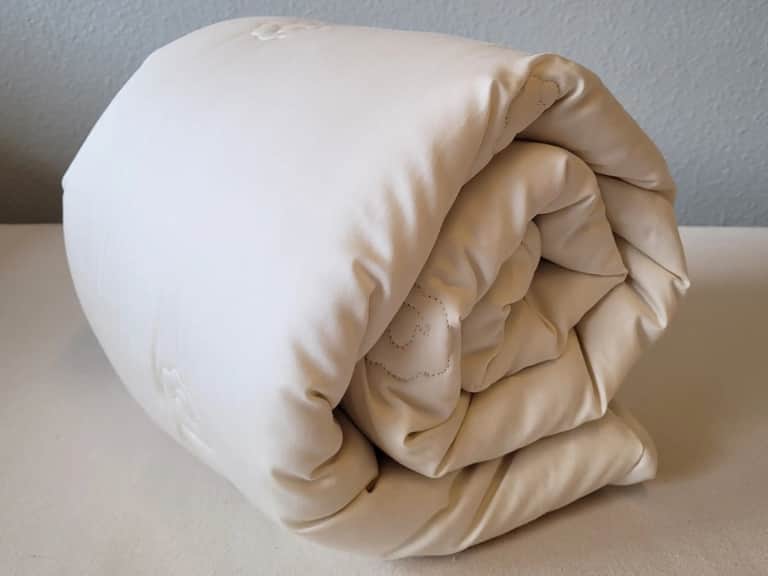
A topper’s stated thickness is a useful starting point, but it doesn’t tell the whole story. Construction determines whether that depth feels lofty, compact, even, or flexible. Quilting and stitching can help hold fill in place; the pattern and spacing of those stitches may affect how evenly the layer feels across the bed. Look for a description of how the filling is secured and whether the construction is intended to distribute it consistently.
Fill weight, when listed, offers another clue. It describes how much filling is used across a given area, but should be considered alongside the product’s dimensions and design. A thicker-looking layer isn’t necessarily more supportive, and a lighter fill doesn’t automatically mean poor quality. For a useful comparison, review the same set of details across products rather than trying to judge from a single number.
Think about the mattress height and your bedding, too. Adding a layer can make a fitted sheet harder to secure, particularly if the mattress is already deep. Confirm that your sheets can accommodate the combined mattress and topper depth, and consider whether the topper will shift under normal use. Practical comfort includes waking up with the layer still in place.
Fit, attachment, and mattress compatibility
A topper that doesn’t fit the bed can bunch, slide, or leave areas uncovered. Check its width and length against your mattress size, and don’t assume that every “queen” or “king” listing has identical measurements. If you use a less common mattress size, verify exact dimensions before making a decision. Also check whether the item is designed to lie flat, fit over the mattress like a fitted sheet, or attach with straps or elastic.
Attachment systems can help keep a layer aligned, but their usefulness depends on the mattress construction and the topper’s design. Review how deep the pockets are if the product has a fitted skirt, and whether any straps are compatible with your bed. A thin pad that stays in place under a fitted sheet may not need the same attachment features as a more substantial topper.
If a mattress is adjustable, split, or unusually shaped, check compatibility with both the mattress and the bed base. The more specific the design, the more valuable exact product measurements and care information become. A little measuring before purchase can save the frustration of trying to make an almost-right fit work.
Care requirements are part of the choice
Care is not an afterthought. It determines whether a topper fits naturally into your routine and can influence how well it holds up over time. Some wool-filled bedding is designed for occasional airing and spot cleaning; some products have removable, washable covers; others require specialist cleaning. Treat the product’s care label as the authority, because instructions for one wool item should not be applied automatically to another.
If you want a low-maintenance option, check exactly what is washable. A washable cover is not the same as a washable filling, and a “washable” description may come with limits on temperature, spin, agitation, or drying method. Confirm whether your washing machine has enough capacity for the item, and whether it needs to dry flat or fully air-dry before use.
A topper that must be aired or professionally cleaned may still be a good choice if that routine suits you. The key is knowing what you are agreeing to before the layer arrives. Regular use of a suitable fitted sheet or protector may also reduce the need to clean the topper itself, though it will not replace the product’s own care instructions.
Certifications, sourcing, and careful claims
For shoppers who care about production standards, look for specific information about fiber origin, processing, and any certifications. A certification applies to defined requirements and scope; it is not a universal guarantee that a product has every quality a shopper might expect. Check which material or stage of production the claim covers, and consult the organization responsible for the standard if you need a precise interpretation.
It is also worth separating sourcing details from broad environmental claims. A product may identify where the wool was raised, where the fabric was made, or where final assembly took place. Those facts help clarify a supply chain, but no single detail describes the full environmental impact of an item. Responsible comparison means looking for specific, verifiable information rather than relying on sweeping language.
If animal welfare, organic agriculture, or traceability is important to you, look for clear documentation and ask questions when descriptions are vague. “Natural” describes a broad material category; it is not, by itself, a certification or proof of a particular farming practice.
A simple checklist for comparing options
Before choosing a wool mattress topper or pad, put the product details side by side. This makes it easier to see what is genuinely different and what is simply described with different marketing language.
- Purpose: Is the item intended to change mattress cushioning, add a thinner surface layer, or mainly protect the mattress?
- Materials: What is the exact filling composition, and what fabric is used for the cover?
- Construction: How is the fill distributed and secured? Is the layer quilted, tufted, or held in place another way?
- Thickness and weight: Are measurements or fill-weight details provided, and do they support the kind of change you want?
- Fit: Does the product match your mattress dimensions and depth? Does it use straps, elastic, or a fitted skirt?
- Care: Can the cover, filling, or complete item be washed? What limits apply to water temperature, agitation, drying, or cleaning?
- Documentation: Are origin, certifications, and material claims specific enough to verify?
- Everyday routine: Will you realistically follow the required care and handling instructions?
If a listing leaves one of these questions unanswered, that is a reason to seek clarification—not to fill in the blanks with assumptions. Clear specifications make for a fairer comparison and a more confident choice.
Common buying mistakes to avoid
One frequent misstep is choosing by fiber name alone. Wool has useful characteristics, but two wool-filled products can differ substantially in softness, thickness, stitching, and care. A Merino label may tell you something about the kind of wool, but it does not replace details about the finished item.
Another is assuming that natural fibers always mean easy maintenance or allergy-free bedding. Sensitivities differ from person to person, and a material claim cannot predict an individual response. If you have known sensitivities, review the full material list and speak with a qualified health professional when needed. Likewise, don’t assume a topper will be machine washable unless the manufacturer says so and provides instructions.
Finally, avoid overlooking dimensions and bed height. Even an appealing product can be a poor match if it slides around, overwhelms a fitted sheet, or doesn’t cover the mattress properly. A quick measurement and a careful read of the care label can be more useful than another round of vague “best topper” searches.
The right choice is the one that fits your bed and your habits
Choosing a natural-fiber mattress topper is less about finding a universally perfect material and more about matching construction to your priorities. Decide whether you want a noticeable change in cushioning or a thinner, breathable surface. Then compare the fill, cover, thickness, stitching, fit, and care requirements with a clear sense of what you will use and maintain.
Wool can be an appealing option for sleepers interested in natural insulation and moisture management, but the details make the difference between a well-matched layer and a frustrating one. Read beyond the product name, verify what is inside, and make sure the care routine works for real life. That’s the kind of practical homework that helps a bed feel considered—not complicated.